Allocating Stakes Across Multiple Sports: Portfolio Methods in Wagering Environments
Written by Cameron Otto · Aug 16, 2026
Allocating Stakes Across Multiple Sports: Portfolio Methods in Wagering Environments
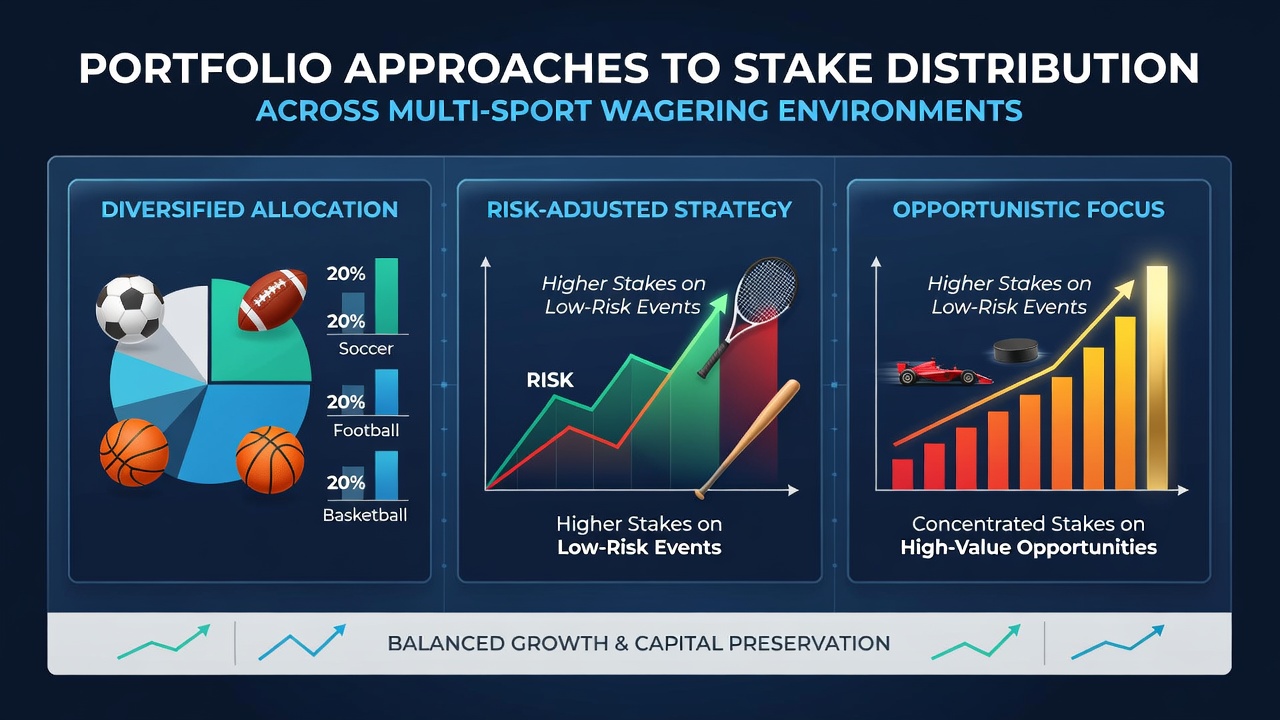
Portfolio approaches to stake distribution treat each wager as part of a broader collection of positions that span several sports and market types, and researchers have documented how this framework reduces variance while preserving expected returns when correlations between outcomes stay low. Data from multi-sport operators shows that bettors who spread exposure across soccer, basketball, tennis, and baseball encounter fewer simultaneous losing streaks than those who concentrate on single leagues, because event schedules and statistical drivers differ substantially by sport.
Core Principles Behind Multi-Sport Allocation
Modern allocation begins with measurement of covariance between different sporting outcomes, and analysts at research institutions have published matrices that quantify how often NBA totals move in tandem with Premier League goal totals or how tennis set margins correlate with baseball run totals. When covariance remains modest, an increase in stake on one sport can offset a decline in another without requiring larger overall capital commitments, and this pattern appears consistently in datasets covering the 2024 through 2026 seasons.
Position sizing within each sport further depends on the liquidity and volatility profile of the chosen market, while observers note that basketball player props exhibit higher short-term variance than soccer match totals, so practitioners adjust unit sizes downward in the former and maintain larger relative stakes in the latter when building a diversified book. Software platforms now import closing-line data from multiple books and output recommended allocations that respect both individual edge estimates and cross-sport correlation limits.
Practical Implementation Steps
Operators and individual bettors first compile historical performance records for each sport they follow, then calculate Sharpe-style ratios that divide average profit by standard deviation of returns across rolling windows. Once ratios exist for soccer, basketball, tennis, and baseball, the next step involves solving a constrained optimization problem that caps total exposure while maximizing the aggregate ratio, and several open-source scripts released by academic groups perform this calculation in seconds using standard portfolio mathematics adapted from equity markets.
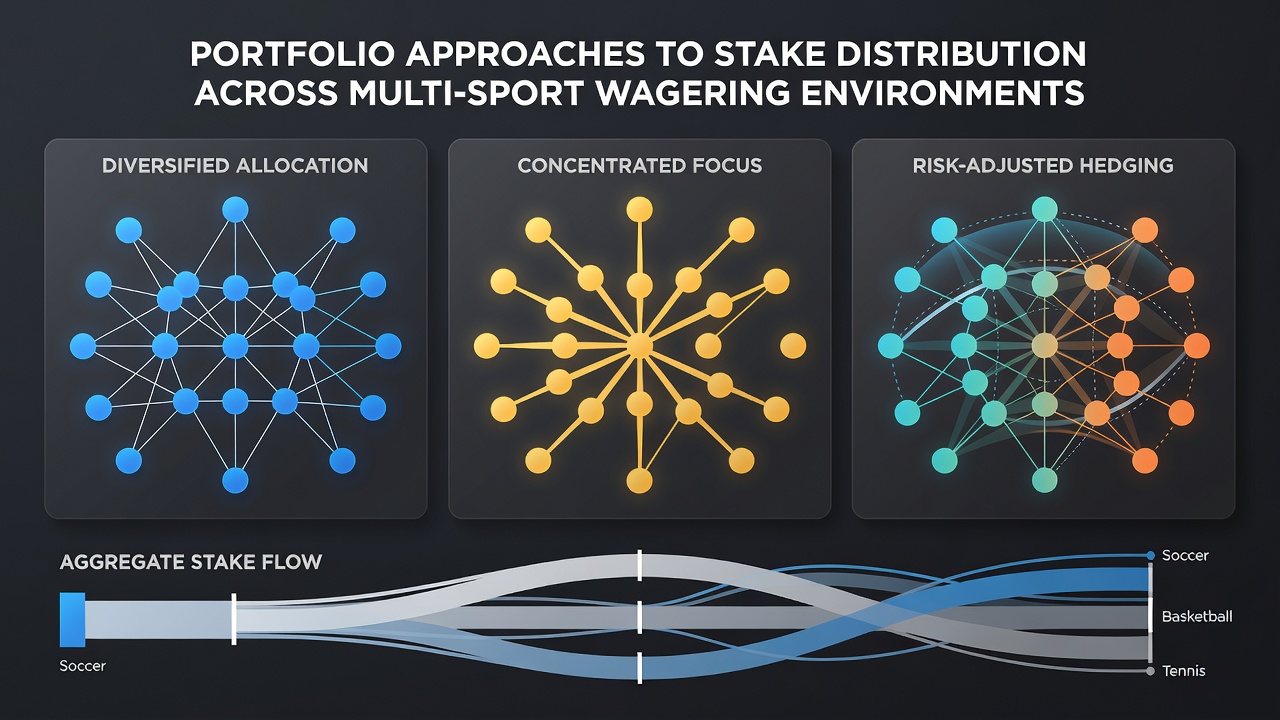
August 2026 brought updated reporting requirements in several North American jurisdictions that now require operators to disclose aggregate customer stake distributions by sport, and early filings indicate that accounts using explicit multi-sport rules maintain steadier month-to-month balances than single-sport accounts, according to aggregated figures released by state gaming agencies. Those same filings also reveal that the average number of active sports per account rose from 2.1 in 2023 to 3.4 in mid-2026, reflecting wider availability of real-time data feeds and automated allocation tools.
Correlation Monitoring and Rebalancing
Because correlation coefficients shift when leagues enter playoffs or when rule changes alter scoring patterns, continuous monitoring replaces static allocation tables, and several European research consortia have released weekly updated covariance estimates that feed directly into allocation engines. Rebalancing occurs when any single sport exceeds a preset percentage of total committed capital or when measured correlation between two sports rises above a chosen threshold, typically 0.35, prompting automatic reduction of the more volatile leg until balance returns.
Industry reports from the Australian wagering sector document that accounts employing weekly rebalancing rules experienced 22 percent lower peak-to-trough drawdowns over the 2025 calendar year compared with static allocation accounts, even though both groups achieved similar cumulative returns. The same reports note that rebalancing frequency above once per week begins to erode edge through increased transaction costs and slippage on live markets.
Regulatory and Data Infrastructure Developments
Canadian provincial regulators published a 2026 guidance note that encourages operators to surface portfolio-level risk metrics to customers, and several major platforms responded by adding dashboard views that display current sport-level exposure alongside suggested adjustments. These dashboards pull live odds and historical outcome data from multiple jurisdictions, allowing users to see how a pending tennis wager would alter overall portfolio beta before the stake is placed.
Academic papers examining European betting records between 2022 and 2025 found that bettors who maintained exposure across at least four sports recorded lower bankruptcy rates at equivalent ROI levels than those focused on one or two leagues, and the difference remained statistically significant after controlling for bankroll size and average stake percentage. The papers attribute the result primarily to the asynchronous timing of major events across sports rather than to any inherent superiority of individual market selection.
Conclusion
Portfolio methods applied to multi-sport wagering rely on measurable covariance, disciplined sizing rules, and scheduled rebalancing to keep overall risk within chosen bounds while pursuing returns across uncorrelated events. Data collected through 2026 confirms that accounts adopting these techniques display smoother equity curves and lower incidence of large drawdowns, provided correlation monitoring remains active and allocation engines receive timely updates from diverse sporting calendars.