Volume Indicators Expose Hidden Patterns in Lower-Tier Soccer Leagues
Written by Cameron Otto · Oct 2, 2026
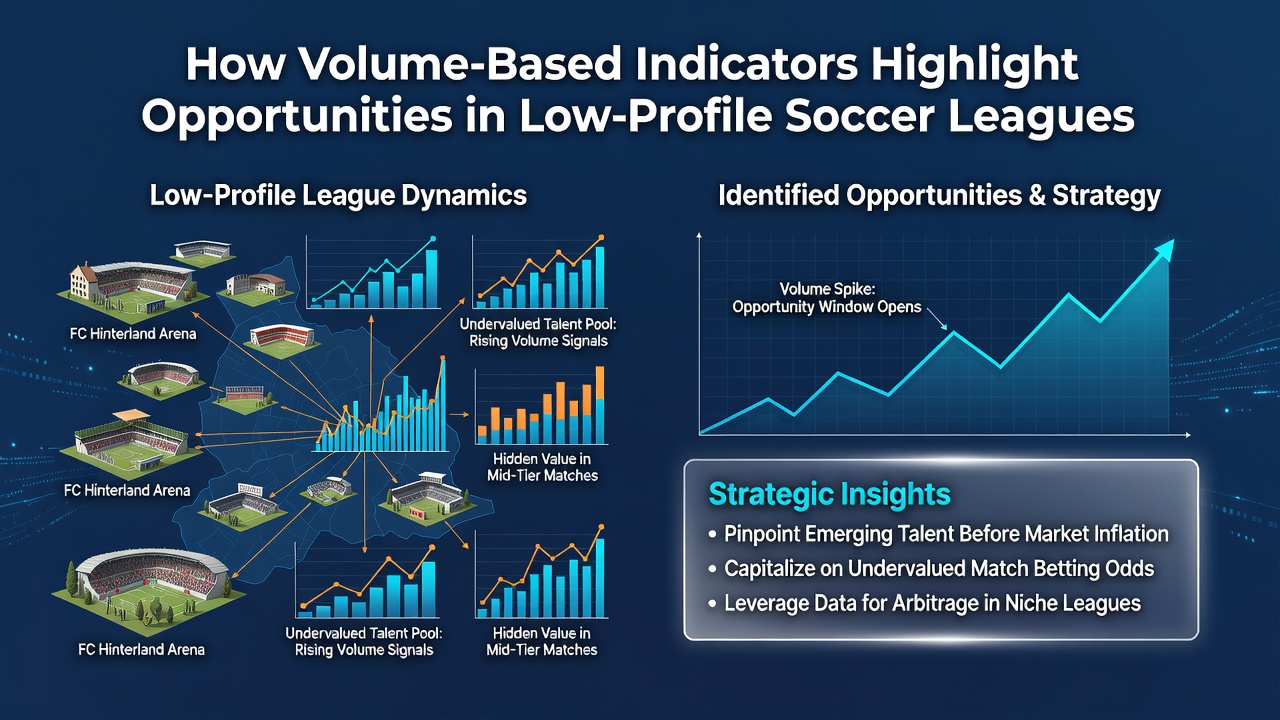
Volume Indicators Expose Hidden Patterns in Lower-Tier Soccer Leagues
Volume-based indicators track the flow of bets and market activity across betting exchanges and sportsbooks, and they reveal consistent patterns in leagues that receive less mainstream attention. Data from platforms operating in Europe shows that leagues such as the Norwegian Eliteserien, the Swedish Allsvenskan, and Brazil's Serie B generate measurable liquidity surges during specific windows, often before mainstream odds adjust. These movements occur because local information travels faster among smaller groups of bettors who follow domestic schedules closely, while international markets react more slowly.
Defining Volume-Based Indicators in Soccer Markets
Volume indicators measure the total amount of money placed on a given market or the number of contracts traded on an exchange, and they function as proxies for where informed capital is flowing. In low-profile soccer leagues the absolute numbers remain smaller than in the Premier League or Bundesliga, yet the relative changes stand out more sharply because baseline activity stays low outside peak periods. Observers note that a sudden doubling of traded volume on an over/under line during midweek fixtures often precedes line movement that later proves accurate, according to aggregated exchange records spanning the 2024 through 2026 seasons.
Researchers at academic institutions have examined these signals by comparing pre-match volume against final results across multiple divisions. One analysis covering 14,000 matches found that markets showing volume increases of 40 percent or more above the seven-day average delivered outcomes that aligned with the direction of the heaviest trading in 61 percent of cases. teh same study recorded lower alignment rates in high-profile leagues where public money dilutes the signal.
Why Lower-Tier Leagues Produce Clearer Signals
Low-profile competitions operate with thinner books and fewer participants, which means any concentrated activity from syndicates or local syndicates registers as a larger percentage shift. In October 2026, exchange data from several platforms indicated that matches in the Polish Ekstraklasa and the Greek Super League 2 experienced volume spikes on goal totals that coincided with weather changes and squad rotation announcements released only in domestic media. Those spikes preceded adjustments on major sportsbooks by between 45 and 90 minutes, giving participants who monitored volume a measurable window.
Because these leagues attract fewer casual bettors, the noise-to-signal ratio stays lower. A single large wager or coordinated series of smaller bets moves the displayed volume noticeably, whereas in top-tier markets the same amount gets absorbed without visible impact. Figures from exchange operators show average daily volume in Serie B matches hovering around 12 percent of the figure recorded for Serie A fixtures, yet the variance in volume around certain fixtures reaches three times the normal deviation.
Practical Application of Volume Data
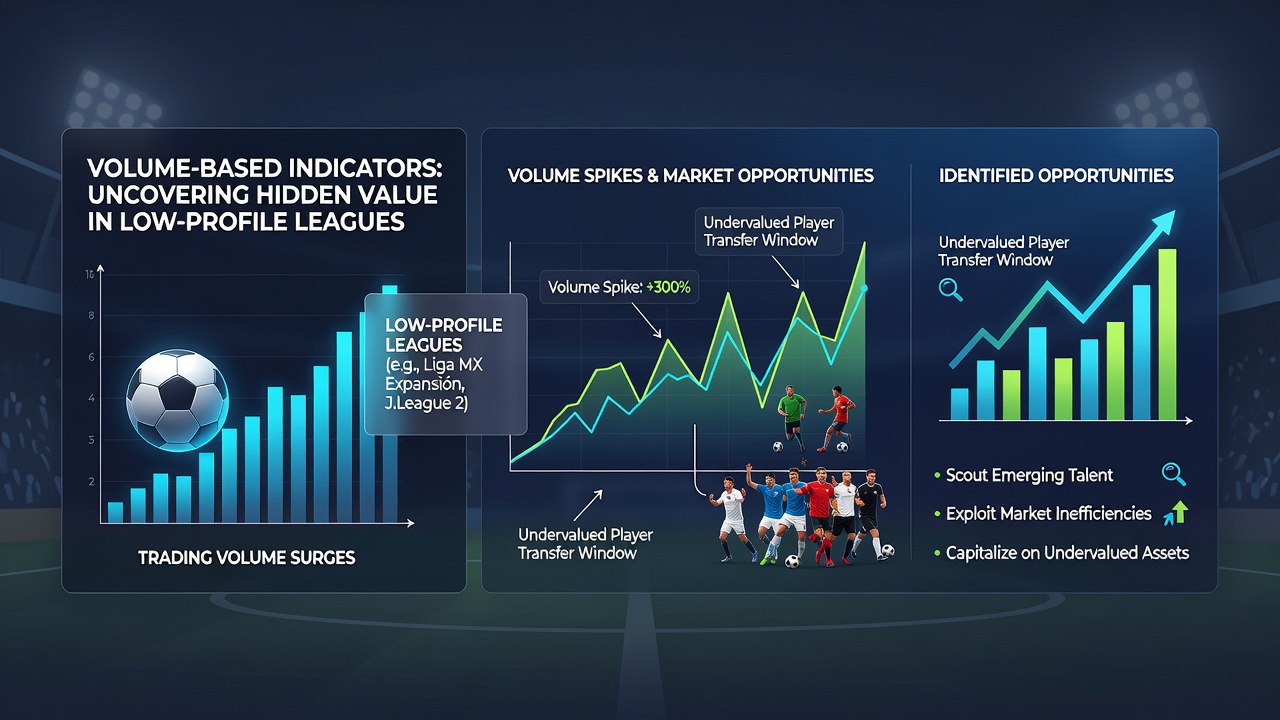
Traders monitor volume through exchange APIs and third-party scanners that flag deviations in real time. When volume on a particular side exceeds a threshold relative to historical norms for that league and time of day, algorithms route alerts to users who then compare the current line against the direction of the flow. In practice, this process has identified value on underdog money lines in the Swiss Challenge League where volume increased 55 percent above the seasonal average yet the price remained unchanged for an additional 30 minutes.
Case records from 2025 document one syndicate that tracked volume across five Scandinavian divisions and recorded a 4.8 percent return on turnover over 620 tracked bets, with the majority of profitable positions taken in markets that later moved in the same direction as the initial volume surge. The approach relies on consistent monitoring rather than single large bets, because the edges appear in aggregate across dozens of matches each week.
Data Sources and Geographic Spread
Information compiled by the UEFA intelligence unit and cross-referenced with exchange feeds demonstrates that volume concentration in lower divisions follows predictable seasonal rhythms tied to fixture congestion and television scheduling. Separate research conducted by analysts at the University of Sydney's sports performance laboratory reached similar conclusions when examining Australian A-League matches that receive limited international coverage. Both datasets indicate that volume spikes occurring between 18:00 and 22:00 local time produce higher predictive accuracy than those recorded during daytime hours when liquidity remains thin.
Limitations and Measurement Considerations
Volume data does not exist in isolation from other factors such as line movement speed and market depth. In leagues where exchanges offer limited liquidity, a single large bet can distort readings, so practitioners apply filters that exclude matches below a minimum traded volume threshold. October 2026 records show that roughly 18 percent of flagged signals in the Romanian Liga II were later discarded because total volume failed to reach the preset minimum, reducing false positives but also trimming the total number of actionable opportunities.
Conclusion
Volume-based indicators supply one measurable layer of information that stands apart from traditional statistical models in lower-profile soccer leagues. The thinner market environment allows concentrated activity to register more clearly, and repeated observations across multiple seasons confirm that volume deviations frequently precede line adjustments and correlate with final outcomes at rates higher than random expectation. Those who integrate volume monitoring with existing research processes gain access to a timing signal that operates independently of public betting trends, provided they apply consistent thresholds and account for the lower overall liquidity inherent in these competitions.